

















































































Kit Artificial Intelligence: Complete Guide to AI Kits in 2026

Artificial intelligence kits make it possible to learn, build, and deploy AI systems without advanced lab infrastructure. From educational robots to professional development boards, kit artificial intelligence solutions now cover every skill level and industry need. At Business Western, we analyse how these kits are shaping practical AI learning and innovation in the UK and beyond.
This guide explains what a kit artificial intelligence setup is, the types available in 2026, real products, performance benchmarks, and how to choose the right option for learning, research, or business projects.
What Is a Kit Artificial Intelligence System?
A kit artificial intelligence system is a packaged set of hardware, software, and learning resources designed to help users build and understand AI applications. These kits often combine sensors, processors, and preconfigured tools for machine learning, robotics, or computer vision.
In simple terms, a kit artificial intelligence solution allows users to move from theory to hands-on AI development using guided projects and real-world examples.
Key characteristics include:
-
Preselected AI-capable hardware
-
Programming support, often Python or Scratch
-
Structured tutorials or manuals
-
Expandability for advanced projects
How AI Kits Have Evolved by 2026
By 2026, kit artificial intelligence products have split into two clear categories. One focuses on physical, hands-on robotics, while the other targets professional-grade AI computation for edge and embedded systems.
This evolution reflects real market needs, including STEM education, autonomous systems, and low-power AI for industry.
Educational and Robotic AI Kits
Educational kits focus on learning by building. These products are widely used in UK schools, universities, and home labs to teach machine learning concepts through interaction and play.
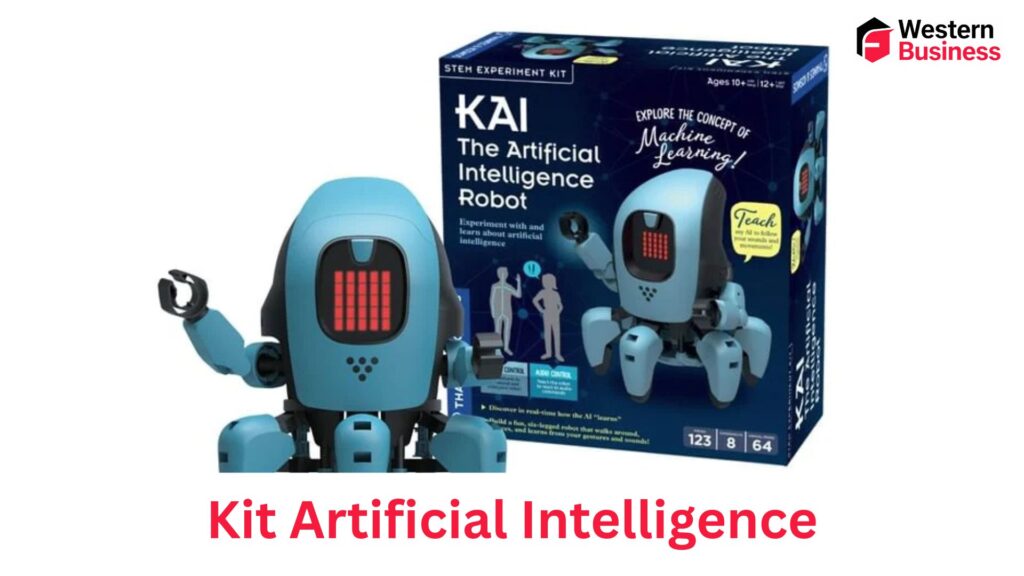
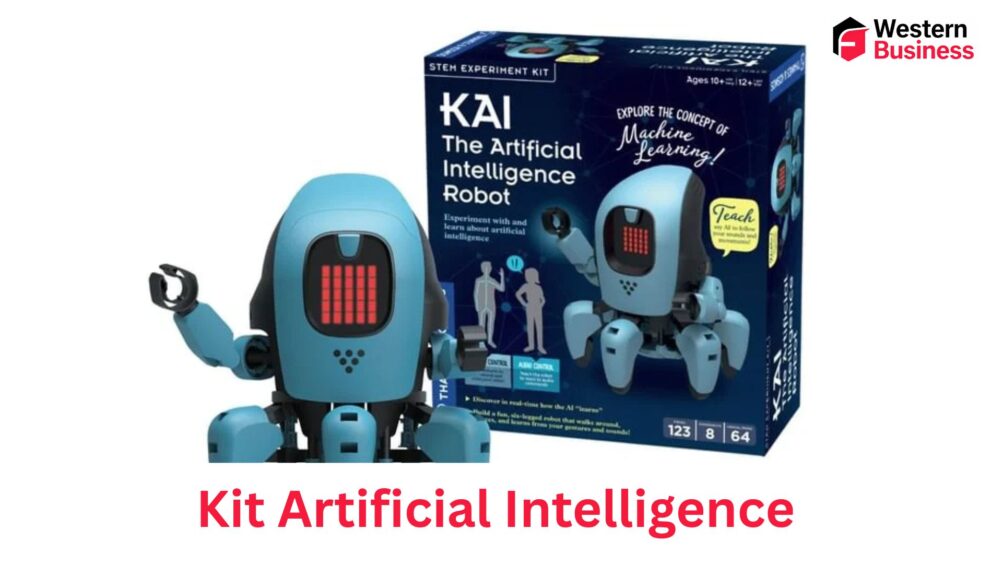
Thames & Kosmos KAI: The Artificial Intelligence Robot
This kit allows users to build a six-legged robot and train it to respond to gestures and sounds.
Key features:
-
64-page illustrated manual
-
App-based learning using a device camera
-
Teaches gesture recognition and sound-based machine learning
-
Suitable for beginners aged 10+
The learning experience is hands-on and time-intensive, but reviewers consistently highlight its educational depth.
Makeblock mBot 2
The Makeblock mBot 2 is a comprehensive STEM robot designed for early AI and coding education.
Highlights include:
-
Scratch and Python programming support
-
CyberPi microcontroller
-
Encoder motors and multiple sensors
-
Expandable with over 60 modules
This kit artificial intelligence platform is widely adopted in UK classrooms due to its modularity and scalability.
SunFounder Raspberry Pi AI Robot Dog
This four-legged robot dog kit is compatible with Raspberry Pi boards and focuses on advanced interaction.
Capabilities include:
-
12 servo motors for realistic movement
-
Vision, hearing, and touch sensors
-
Python programming
-
Integration with large language models such as ChatGPT-4o
This kit is often used by hobbyists and intermediate learners exploring AI-powered robotics.
SunFounder PiCar-X 2.0
The PiCar-X 2.0 is a self-driving robot car that demonstrates real autonomous vehicle concepts.
Core features:
-
Raspberry Pi powered
-
Python and Blockly support
-
OpenCV and TensorFlow compatibility
-
Voice and video recognition
-
Integration with LLMs like Gemini and ChatGPT-4o
It provides practical exposure to AI perception and decision-making.
Elephant Robotics AI Kits
Elephant Robotics focuses on desktop robotic arms such as myCobot and mechArm.
These kits teach:
-
Vision AI and hand-eye calibration
-
YOLOv5 object recognition
-
Inverse kinematics
-
ROS-based robotic algorithms
They are commonly used in higher education and professional training environments.
AI Hexapod with Vision Arm
This high-end STEM kit includes a Raspberry Pi 4B and advanced robotics features.
It supports:
-
Face activation
-
Target tracking
-
Smart carrier modes
-
Multi-unit group control
This kit artificial intelligence solution is aimed at advanced learners and institutional labs.
Professional AI Development Boards
Professional kits provide raw AI computing power measured in TOPS or TFLOPS. These boards are essential for developers building production-ready AI systems.
Performance Comparison of Leading AI Boards
| Hardware Kit | AI Performance | Primary Use Case |
|---|---|---|
| NVIDIA Jetson AGX Thor | 2070 TFLOPS (FP4) | Humanoid robotics and advanced autonomy |
| Yahboom Jetson Orin NX | 157 TOPS | High-speed robots and 3D mapping |
| Raspberry Pi AI Kit | 13 TOPS | Budget-friendly edge AI |
| Qualcomm Vision AI IQ9 | 100 TOPS | Industrial inspection and smart cameras |
| Google Coral Dev Board | 4 TOPS | TensorFlow Lite edge projects |
Raspberry Pi AI Kit
The Raspberry Pi AI Kit integrates a Hailo-8L neural inference accelerator.
Key benefits:
-
13 TOPS performance
-
Fully integrated with Raspberry Pi camera stack
-
Power-efficient and cost-effective
-
Ideal for independent AI software development
It is often recommended as a first professional kit artificial intelligence platform.
NVIDIA Jetson Orin Nano and Orin NX Kits
Jetson-based kits offer significantly higher performance for modern AI models.
Advantages:
-
Support for advanced robotics and drones
-
Capable of running modern vision and language models
-
Suitable for edge AI in commercial environments
The setup process is complex but justified by performance gains.
TinyML and Microcontroller AI Kits
TinyML kits are designed for ultra-low-power AI tasks where small sensors detect patterns in real time.
Arduino Nano BLE Sense Rev2
This board is widely considered the TinyML standard.
It includes:
-
Motion, sound, and light sensors
-
Low-power ARM architecture
-
TensorFlow Lite for Microcontrollers support
Seeed Xiao ESP32S3 Sense
This compact board offers an affordable entry point to vision AI.
Features:
-
Built-in camera and microphone
-
Strong community support
-
Ideal for basic computer vision projects
Arducam Pico4ML
Powered by the Raspberry Pi RP2040, this board is built specifically for embedded machine learning.
It supports:
-
TensorFlow Lite Micro
-
Vision-based inference
-
Real-time sensor processing
Software-Only AI Learning Kits
In 2026, kit artificial intelligence also includes cloud-based platforms that eliminate hardware requirements.
Azure AI Platform
Azure AI provides:
-
Prebuilt templates
-
Bot frameworks
-
Knowledge mining tools such as Form Recognizer
Google Cloud AI Hub
This platform offers:
-
Reusable machine learning models
-
PyTorch and Keras support
-
Rapid deployment workflows
Synthesia and HeyGen
These AI video kits convert scripts into multilingual training videos using avatars.
They are widely used for:
-
Corporate learning
-
Marketing
-
Internal communications
How to Choose the Right AI Kit
Selecting the right kit artificial intelligence product depends on your goals.
Consider the following:
-
Learning vs production use
-
Required AI performance
-
Power consumption
-
Programming language support
-
Expandability
For beginners, robotic kits provide intuitive learning. For businesses and developers, professional boards offer long-term scalability.
Practical Use Cases in the UK Market
In the UK, AI kits are increasingly used for:
-
STEM education
-
Smart manufacturing
-
Robotics research
-
Computer vision startups
-
Edge AI for retail and security
These applications align closely with the innovation trends covered by Business Western.
FAQs
What is the best kit artificial intelligence option for beginners?
Educational robot kits such as Thames & Kosmos KAI and Makeblock mBot 2 are ideal for beginners due to structured learning and ease of use.
Are AI kits suitable for professional development?
Yes. Boards like NVIDIA Jetson and Raspberry Pi AI Kit are widely used in professional and commercial AI projects.
Can AI kits run large language models?
Some advanced kits support integration with models like ChatGPT-4o, particularly when paired with Raspberry Pi or Jetson platforms.
What programming languages are commonly used?
Python is the most common language, followed by Scratch for beginners and C++ for embedded systems.
Are software-only AI kits effective?
Cloud-based kits are effective for rapid deployment, but they lack the hardware learning experience of physical kits.
Final Thoughts
Kit artificial intelligence solutions have matured into powerful tools that bridge education, innovation, and industry. Whether you are a student, developer, or business leader, the right kit artificial intelligence platform can accelerate real-world AI understanding and deployment.
At BusinessWestern.co.uk, we focus on practical, future-ready technologies shaping the UK business and technology landscape. As AI adoption grows, understanding and selecting the right kit artificial intelligence system will remain a critical skill for the next generation of professionals.