








































































































What Is a Busy Board? Complete UK Guide for Parents and Toddlers

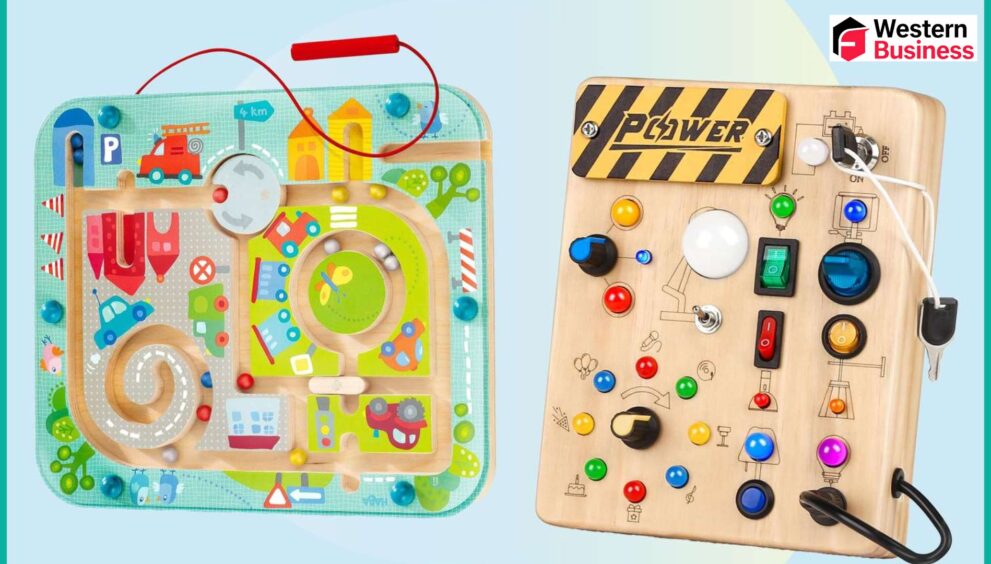
A busy board is an educational, hands-on activity board designed to help toddlers develop essential life and motor skills through safe, independent play. It uses everyday objects like locks, latches, zips, and switches to encourage curiosity, focus, and problem-solving.
At BusinessWestern.co.uk, we focus on explaining practical concepts in a clear, trustworthy way, and this guide gives you everything you need to know about a busy board—from benefits and age suitability to DIY ideas and safety tips.
What Is a Busy Board?
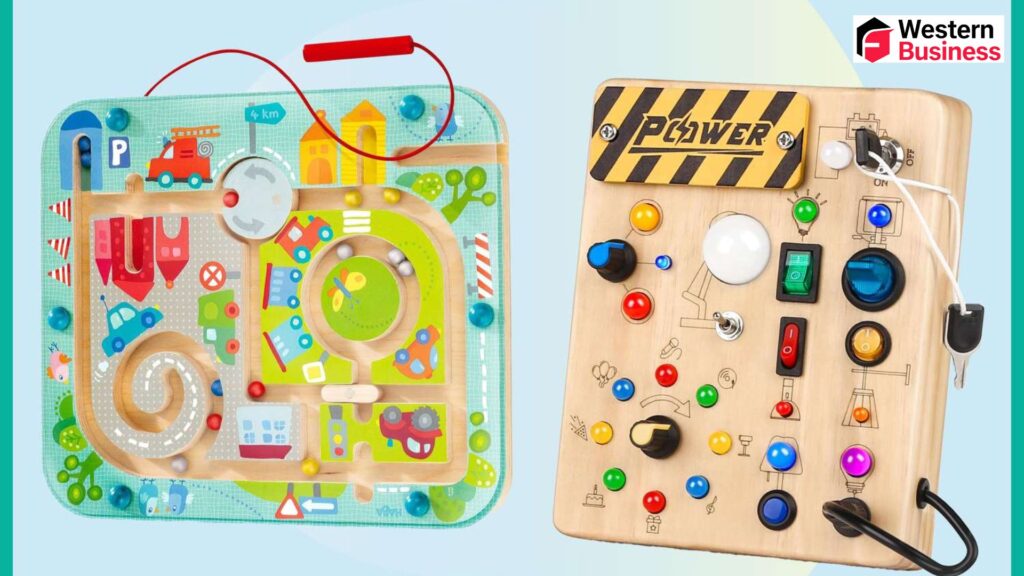
A busy board (also known as an activity board or sensory board) is a flat board or panel fitted with interactive items that children can touch, move, twist, and explore. These boards are inspired by Montessori learning principles and are designed for toddlers and young children aged around 12 months to 5 years.
The purpose of a busy board is to provide hands-on learning using real-world objects in a controlled and safe environment. Instead of passive screen time, children engage in active discovery and skill-building.
Key Features of a Busy Board
A well-designed busy board includes everyday mechanisms that children naturally find interesting. These features are chosen to improve coordination and cognitive development.
Common elements found on a busy board include:
-
Door locks and bolts
-
Light switches and buttons
-
Zippers and buckles
-
Gears and spinning wheels
-
Latches, hooks, and keys
Each component encourages children to experiment, helping them understand cause and effect while strengthening hand-eye coordination.
Benefits of a Busy Board for Toddlers
A busy board supports early childhood development in multiple ways. Research into hands-on learning shows that tactile play improves memory retention and focus in young children.
Main benefits include:
-
Improved fine motor skills through grasping and twisting
-
Better concentration and attention span
-
Logical thinking and problem-solving development
-
Increased independence and confidence
-
Reduced screen time during quiet play
For parents in the UK looking for educational toys that are both practical and affordable, a busy board offers long-term value.
Sensory Development and Learning Through Play
A busy board provides a rich sensory experience by combining textures, sounds, and movement. This kind of stimulation is particularly beneficial for toddlers who learn best through touch and interaction.
Sensory benefits include:
-
Tactile stimulation from different materials
-
Auditory feedback from clicks and switches
-
Visual engagement through colours and movement
This makes a busy board especially helpful for children who need structured sensory input.
What Age Is a Busy Board Suitable For?
A busy board is generally suitable for children aged 12 months to around 5 years. The complexity of the board should match the child’s developmental stage.
Age guidance:
-
12–24 months: Simple switches, textures, and large items
-
2–3 years: Zippers, locks, and spinning elements
-
4–5 years: More complex mechanisms and lifeskill tasks
Parents can adjust or upgrade a busy board as their child grows, making it a flexible learning tool.
Types of Busy Boards Available in the UK
There are several types of busy board designs available to suit different needs and lifestyles.
Popular options include:
-
Wooden busy board: Durable and eco-friendly
-
Fabric busy board: Lightweight and ideal for travel
-
Montessori busy board: Focused on practical life skills
-
Sensory-focused board: Designed for tactile exploration
In the UK market, wooden and Montessori-style busy board designs are particularly popular due to their durability and educational focus.
How to Make a DIY Busy Board at Home
Many parents choose to create a DIY busy board using household items. This allows full control over design, cost, and difficulty level.
Basic materials needed:
-
Wooden board or sturdy base
-
Old keys, zippers, bolts, or wheels
-
Screws, glue, and child-safe fixings
DIY busy board tips:
-
Sand all edges to avoid splinters
-
Secure items tightly so they cannot be removed
-
Avoid sharp or small detachable parts
-
Test every component before giving it to a child
A DIY busy board is a budget-friendly option that can be customised to your child’s interests.
Safety Considerations for a Busy Board
Safety is essential when choosing or building a busy board. All components should be securely attached and age-appropriate.
Key safety tips:
-
Use non-toxic materials and paints
-
Avoid choking hazards for under-3s
-
Supervise play for younger toddlers
-
Regularly inspect the board for loose parts
Following these guidelines ensures that a busy board remains a safe learning environment.
Why Every Toddler Needs a Busy Board
A busy board encourages independent play while supporting early development. It allows children to explore “grown-up” objects safely, which builds confidence and practical understanding.
For parents balancing work, routines, and childcare, a busy board provides meaningful engagement without screens, making it ideal for quiet time, travel, or home learning.
Busy Board vs Screen Time
Unlike digital devices, a busy board promotes active learning. Studies consistently show that hands-on play improves cognitive development more effectively than passive screen use in early childhood.
A busy board helps children:
-
Stay engaged without overstimulation
-
Develop real-world skills
-
Build focus and patience
This makes it a healthier alternative to tablets or phones.
FAQs About Busy Boards
What is the purpose of a busy board?
The purpose of a busy board is to support early learning by improving fine motor skills, focus, and problem-solving through hands-on play.
What age is a busy board for?
A busy board is suitable for children from around 12 months up to 5 years, depending on design complexity.
What goes on a busy board?
Common items include locks, latches, zippers, switches, wheels, and textured materials.
Are busy boards Montessori approved?
Many busy board designs follow Montessori principles by encouraging independent, practical learning.
Is a busy board good for travel?
Yes, fabric or compact busy board designs are ideal for travel, keeping toddlers engaged on trains, planes, or car journeys.
Final Thoughts: Busy Boards and Smart Parenting Choices
A busy board is more than just a toy—it is a practical learning tool that supports early development, independence, and curiosity. Whether you buy one or create a DIY version, it offers long-term benefits for both children and parents.
At BusinessWestern.co.uk, we aim to provide clear, research-based guidance on everyday topics that matter to families and professionals in the UK. Choosing a busy board is a smart, evidence-based decision for parents who value meaningful, screen-free learning.